 English
 Romana
Why do backlinks still matter, when Google keeps talking about E-E-A-T, helpful content, and AI Overviews? The short answer is that backlinks remain one of the core signals Google uses to evaluate a domain's authority — how much other sites, publishers, and publications trust your content — and that signal hasn't been replaced by content quality, it's evaluated alongside it. Link building is the deliberate process of earning links from other sites to yours, and off-page SEO is the broader category it belongs to: everything that influences a site's ranking from outside its own pages, from backlinks to brand mentions and external trust signals.
For a website based in Romania, the practical challenge isn't whether to do link building, but how to do it without violating Google's policies on manipulative links — a real risk, especially when agencies or freelancers pitch packages of "100 guaranteed backlinks" at a fixed price. Last updated: July 3, 2026.
This article explains what separates quality backlinks from risky ones, which link building tactics work organically for the Romanian market, which techniques violate Google's link policies, how to measure results in Search Console, and what a practical 30-60-90 day plan looks like. It's useful for business owners, in-house SEO specialists, and content teams who want to build domain authority without risking penalties.
What link building and off-page SEO actually mean
Off-page SEO groups every activity that influences a site's ranking without directly changing its pages: link building, digital PR, brand mentions (even without a link), presence on external platforms, and social signals. Link building is the most concrete and measurable part of off-page SEO, because every backlink is a verifiable entity — it can be identified, evaluated, and, if necessary, disavowed.
- Backlink — a link from another site pointing to yours; the basic unit of link building.
- Referring domain — a distinct site that contains at least one backlink to your domain; a more meaningful metric than the raw link count, since 10 links from the same domain usually count for far less than 10 links from 10 different domains.
- Domain authority — an estimated score (usually from a third-party tool, not an official Google metric) of a domain's strength, partly based on its backlink profile.
- Anchor text — the visible text of a backlink; relevant for external links too, not just internal ones.
- Link spam — Google's term for links created mainly to manipulate ranking, not to help an actual user.
The difference from internal linking is clear: internal linking distributes authority already present on a site between its own pages, while link building brings in new authority from outside the site. For eCommerce sites specifically, a well-optimized category page — see our guide on eCommerce category page SEO — becomes far more valuable once it also earns relevant external backlinks, not just traffic from internal linking.
Why backlinks still matter for a Romanian website in 2026
Google's official documentation on links confirms that a healthy backlink profile remains relevant to how well a site is discovered and evaluated, even though modern algorithms combine this signal with many others, including content quality. In practice, the difference shows up most on competitive topics: a new site with strong content but zero external backlinks competes much harder against a site with already-established authority, even when both are equally well optimized on-page.
Backlinks also bring an indirect, often underrated benefit: referral traffic directly from the linking site, independent of Google rankings. An article cited by a niche publication or a local partner can bring in qualified visitors even if that particular backlink doesn't visibly move rankings in the short term.
Quality backlinks vs. risky backlinks: how to tell them apart
Not all backlinks carry the same value, and some can actually do more harm than good. The table below summarizes the main criteria for quickly evaluating a potential backlink before actively pursuing it.
| Criterion | Quality backlink | Risky backlink |
|---|---|---|
| Relevance of the source site | Same or complementary topic to your domain | No visible topical connection |
| Reason for the link | Natural citation, useful resource for the source site's readers | Paid link without a sponsored/nofollow attribute, or a large-scale reciprocal exchange |
| Source site profile | Real editorial content, visible organic traffic, other external links received | Site created solely to host links (PBN-type network) |
| Link context on the page | Naturally integrated in the text, with descriptive, varied anchor text | Dense list of links with no context, in a footer or sidebar, across dozens of different sites |
| Acquisition speed | Gradual growth, correlated with real editorial activity | Hundreds of new backlinks in a very short window, with no visible campaign behind them |
Organic link building strategies that work for Romanian websites
The tactics below share one principle: the link exists because someone considered your content useful enough to cite it, not because they were paid directly for it.
- Local digital PR — pitching Romanian niche publications and blogs with original data, case studies, or expert opinions on a topical subject in your industry.
- Resource link building — finding relevant resource pages (lists of guides, tools, recommended suppliers) where your content would fit naturally, and proposing inclusion with a clear value argument.
- Ethical guest posting — articles written for other relevant publications, with a single contextual link, not a list of commercial anchor-text links; the publication needs a real audience and real editorial content, not just paid link space.
- Broken link building — finding broken external links on relevant pages in your niche and proposing your own content as a replacement, with a clear benefit for the source site's owner too (it fixes a real problem on their page).
- Local partnerships and business mentions — business associations, chambers of commerce, local events, suppliers, and clients who can mention the collaboration on their own site, with a natural link.
- Inherently linkable content — original studies, statistics, free tools, or reference guides that other sites cite because it's easier than redoing the research themselves.
Link building techniques that violate Google's policies, and how to avoid them
Google explicitly defines, in its link spam policy, the practice of creating links "primarily for the purpose of manipulating ranking," whether the links point to your own site or from your site to others. The risk is not theoretical: sites identified with manipulative link patterns can lose significant visibility, sometimes for extended periods.
- Buying links without a qualifying attribute → risk: paid links that pass ranking authority directly, without
rel="sponsored"orrel="nofollow", directly violate Google's policy; mitigation: if you pay for a link (advertorial, sponsored article), explicitly request the correct attribute or walk away from the deal. - Private blog networks (PBNs) → risk: artificially created sites, with no real editorial content, built solely to host links to a main domain; mitigation: invest in content that attracts links naturally instead of building artificial link infrastructure.
- Excessive link exchanges → risk: "I'll link to you, you link to me," done systematically and at scale, is explicitly listed by Google as a manipulation pattern; mitigation: occasional, editorially justified partnerships are different from systematic large-scale exchanges.
- Low-quality link directories → risk: mass submissions to unmoderated directories add low-value, sometimes negatively-signaling entries to your link profile; mitigation: pick only directories relevant to your niche or locality, with a real vetting process.
- Automated link generation → risk: tools or services that create links at scale without editorial involvement are explicitly treated as link spam; mitigation: treat any tactic promising a large volume of links "automatically" with suspicion, not as something to adopt directly.
The distinction between rel="nofollow", rel="sponsored", and rel="ugc" matters in exactly this context: paid links should be marked sponsored, links from user-generated content (comments, forums) should be marked ugc, and nofollow remains valid for any other case where you don't want Google to associate your site with the linked page.
How to measure and track the results of a link building program
Search Console remains the official, free source for seeing the backlinks Google has already identified pointing to your site, even though it doesn't show absolutely every link that exists on the web.
- In Search Console, the "Links" section shows the domains sending the most links to your site and your most-linked pages — use it as a starting point, not a complete inventory.
- Track new referring domains monthly, not just the raw link count; a few relevant new domains matter more than dozens of links from the same site.
- Correlate backlink profile growth with ranking movement for the pages that received those links, in the "Performance" report.
- If you identify clearly toxic backlinks created by third parties without your involvement (negative SEO), document them and use the "Disavow links" tool in Search Console only for this specific case, not preventively.
A practical 30-60-90 day link building plan
Days 1-30: foundation
- Audit your current backlink profile in Search Console and identify any existing toxic links.
- Pick 2-3 tactics that fit your business (for example local digital PR and resource link building), not all of them at once.
- Identify 15-20 relevant, topically close sites as an initial prospecting list.
Days 31-60: execution
- Send your first pitches or content proposals to the prospecting list.
- Publish at least one piece of inherently linkable content (a study, a reference guide, a simple tool).
- Track responses and adjust your outreach message based on the feedback you get.
Days 61-90: evaluation and scaling
- Check how many new referring domains you earned and which tactic drove most of them.
- Drop tactics with a very low response rate and put more effort into the ones that worked.
- Document the process as a repeatable workflow, so you don't restart research from scratch every cycle.
In-house link building or an agency: how to decide
The right choice depends less on available budget and more on the time and existing relationships you already have in your niche.
| Situation | In-house | Agency/external specialist |
|---|---|---|
| Existing relationships with press or niche partners | Recommended — the personal relationship increases success rate | Useful for filling out the prospecting list |
| Internal time available for consistent outreach | Needs at least 4-6 hours/week, sustained | Recommended if that consistent time doesn't exist |
| Experience spotting risky backlinks | Requires initial training on Google's policies | Recommended for teams without SEO experience |
| Red flag when choosing an agency | — | Avoid any offer with a "guaranteed number of backlinks" at a fixed price |
Regardless of the option you choose, the verification criterion stays the same: every proposed backlink needs to pass the test from the quality-vs-risky section above, not just a volume promise.
FAQ - Link Building and Off-Page SEO
1. How many backlinks does a site need to rank higher in Google?
There's no fixed number; the quality and relevance of referring domains matter far more than raw volume. A site with 10 backlinks from relevant niche publications can outperform one with 200 low-quality or irrelevant links.
2. Is it risky to buy backlinks?
It's risky if the paid links pass ranking authority without a sponsored or nofollow attribute — that explicitly violates Google's link spam policy and can lead to a loss of visibility. Properly tagged sponsored content is not prohibited.
3. Does guest posting still work in 2026?
Yes, but only the ethical version: articles written for relevant publications with a real audience and original editorial content, not "guest post" services created solely to sell links across dozens of sites at once.
4. How long does it take to see results from a link building program?
The first new referring domains can appear within a few weeks of a backlink going live, but visible ranking impact usually shows up after 2-4 months of consistent activity, not from a one-off campaign.
5. What's the difference between rel="nofollow", rel="sponsored", and rel="ugc"?
Sponsored is used for paid or advertising links, ugc for links in user-generated content (comments, forums), and nofollow for any other case where you don't want Google to associate your site with the linked page.
6. Should I use the Disavow Links tool for every weak backlink?
No. Disavow is recommended only for clearly toxic backlinks created by third parties without your involvement (for example a negative SEO attack), not preventively for every mediocre-quality link found in Search Console.
Conclusion
Link building remains an essential part of off-page SEO for websites based in Romania, but the difference between growing domain authority and risking a penalty comes down to tactic choice: backlinks earned through relevant content and real relationships, not bought in bulk or generated artificially. The highest-impact first step is auditing your current backlink profile in Search Console, followed by choosing 2-3 organic tactics that fit your business, not a long list of methods applied superficially.
Want a link building plan built for your website, without the risk of a penalty? Contact us or check out our SEO services. For context on the fundamentals of search engine optimization, see also our eCommerce category page SEO guide.
Expertise: link building and digital PR campaigns applied on real SEO projects in Romania, backlink profile evaluation and risk audits for off-page tactics, developed by the HappyWeb team.
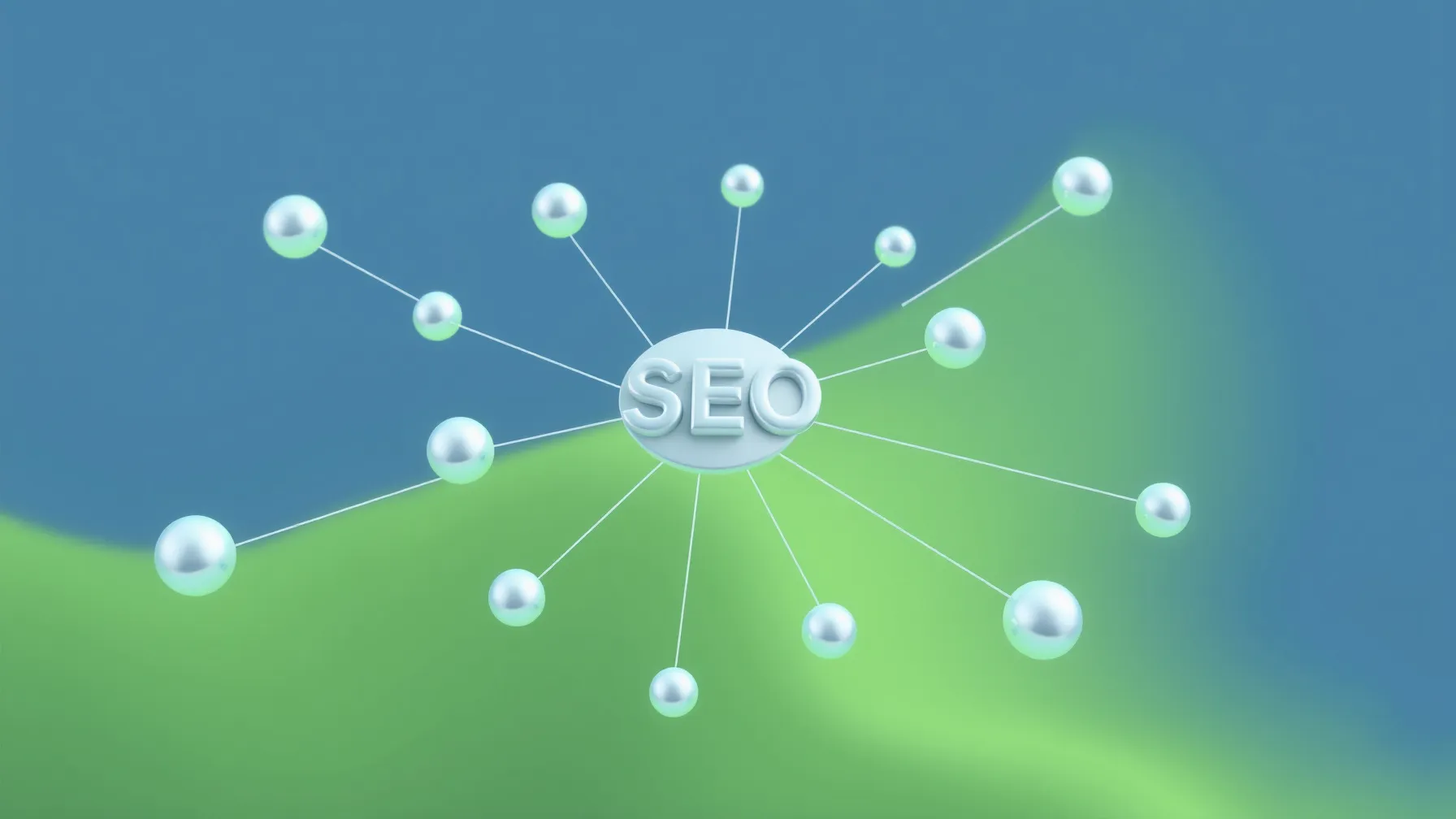
Image generated with AI, used for illustrative purposes.



Write a comment